Housing: Picard or Flemish influence?
Rural housing is marked by the combined influences of geography and history, themselves linked to the territory’s border position: Anglo-Saxon, Flemish, and Picard influences.
A territory split in two
Several main types of dwellings can be distinguished: dune houses, bourgeois residences in the maritime plain villages, and farms with closed courtyards in the south versus open courtyards towards the north.
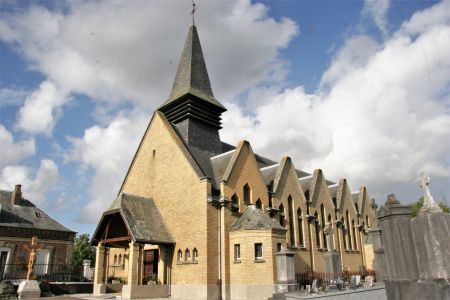
These influences are found in the choice of traditional materials. Thus, brick, a witness to Flemish influence, is very frequently used in the northern part of the territory. However, like wattle and daub (torchis), it can be whitewashed or painted. Further south, it gives way to fairly soft white limestone, sometimes alternating with layers of red brick.
It was not until the end of the 18th century that brick and tiles replaced older materials in peasant houses—timber framing and wattle and daub for the walls, thatch for the roofing. Brick also replaced stone, which was difficult to transport and more expensive. Builders then made massive use of a hard, resistant brick, dark or sand-colored.