Platier d’Oye Trail
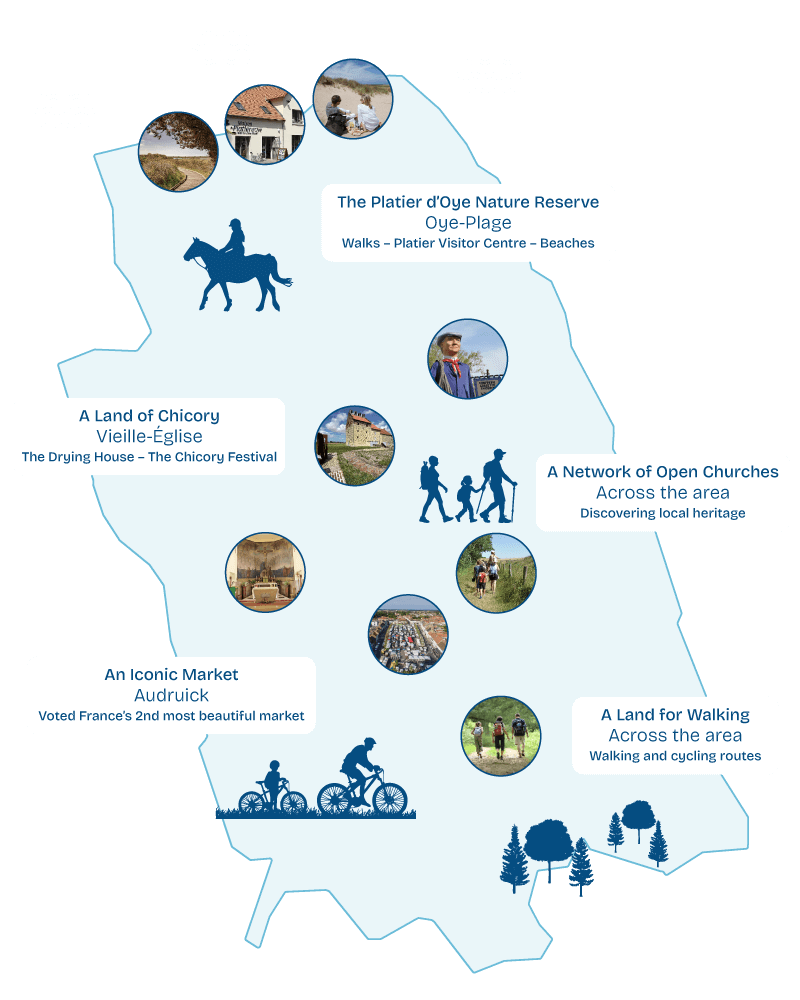
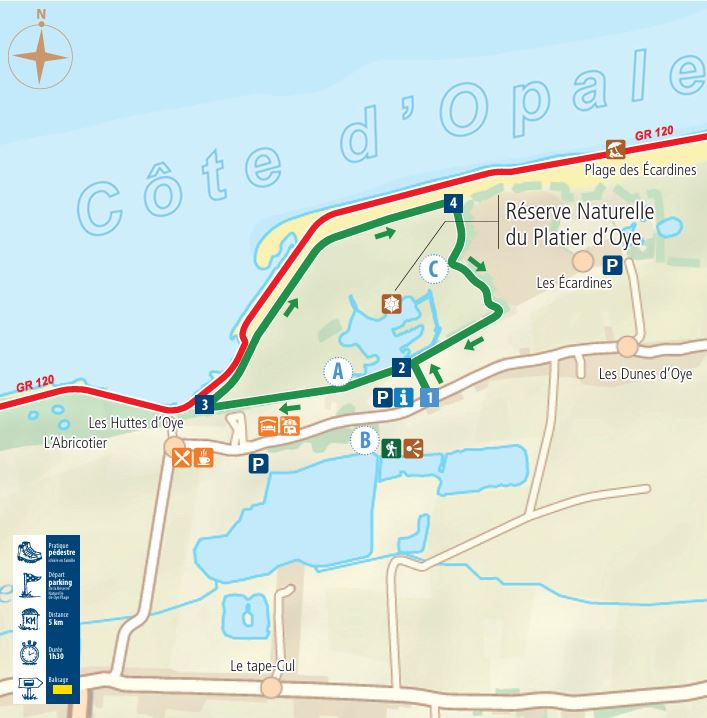
Among the dunes or along the beach, take the time to stop at the various observation points to admire the birds, as well as the famous Highland cattle. These mammals, with their distinctive brown coats, originate from Scotland. Perfectly adapted to the local climate, they play a key role in naturally maintaining the site.
Practical information
Walking

Start
Oye-Plage Nature Reserve Car Park

Distance
5km

duration
1h30
But who is this curious Highland cow?
I am very often mistaken for animals I am not: a buffalo, a bison, or an aurochs. I am in fact a Scottish breed of cow.
Humans introduced me here at the Platier d’Oye. My mission is very simple: to graze on the meadow grass. There is no need to feed me, it could actually make me ill.
Not to be missed during your walk!
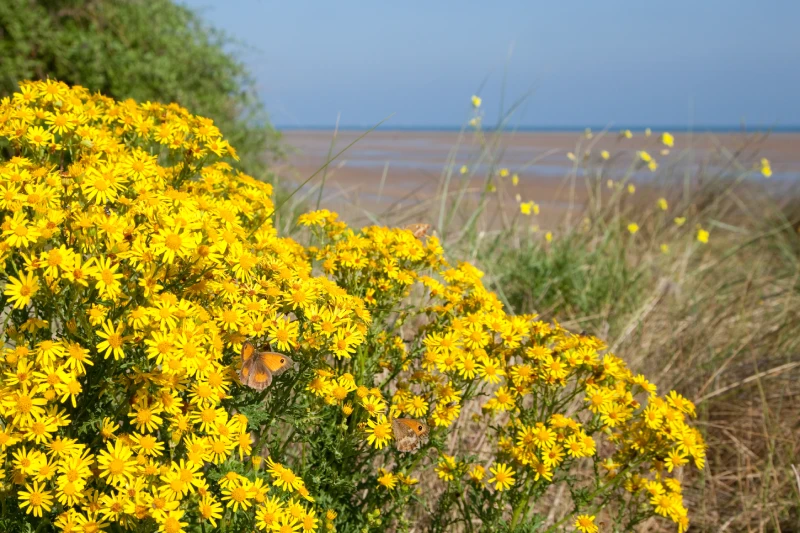
Marram grass
I have been used to stabilise dunes with my roots since the 19th century. I am frequently replanted to protect weakened areas of the white dune. These areas are then closed to the public until my stabilising work is complete. As I am quite fragile, I cannot withstand being trampled by walkers.
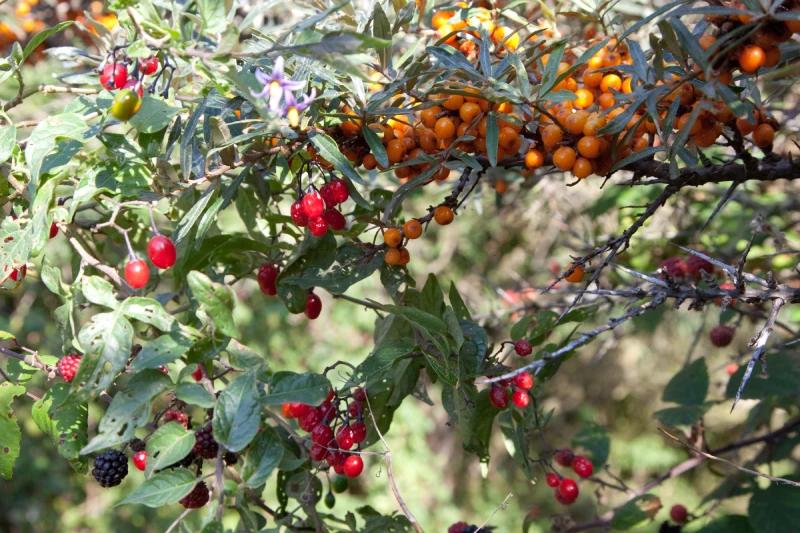
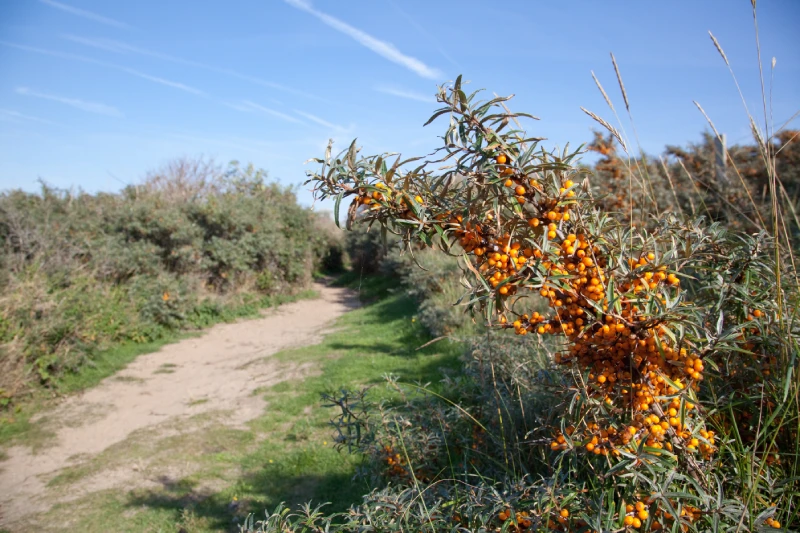
Sea buckthorn
I am the emblematic plant of the shrubby dune. I produce orange berries that are a real treat for many birds in autumn. Sunshine and sandy soils are among the things I enjoy most.
I am very rich in vitamin C.
The Northern Lapwing
An unmistakably distinctive bird, here I am, dressed in a smart black-and-white tuxedo with beautiful greenish iridescent reflections. And of course, I must not forget my most original hairstyle, a crest. From March onwards, you can see me and hear me performing loud and lively courtship displays.
The Eurasian Wigeon
I can be in two places at once, sometimes on the pond, sometimes on land. I arrive here with many companions in autumn and leave again in spring, heading north to raise my future offspring. The Platier is my winter home, where I spend my time sleeping and feeding on seeds and blades of grass.