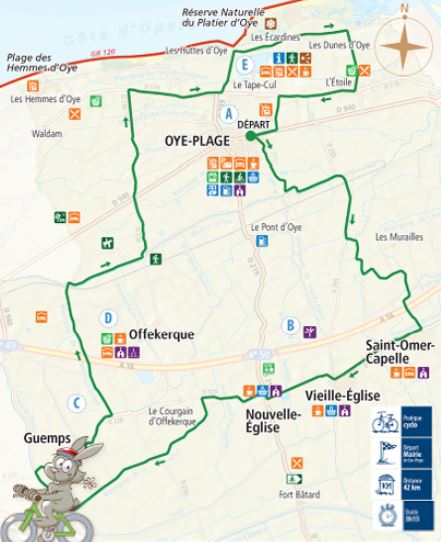
Mills and Drying Houses Trail
This is a completely flat route, with not a single hill in sight. Welcome to the “Pays des Wateringues” in the Maritime Flanders.

Practical information
Bicycle

start
Town hall of Oye-Plage

Distance
42km

duration
3h15
A bit of history…
Long ago, the sea covered this territory during high tides, but in the 10th century the ingenuity of Benedictine monks made it possible to build a network of drainage channels known as watergangs. This land, with its light and sandy soil, is well suited to the cultivation of chicory. Large buildings of yellow or red brick were once used to dry chicory roots. Here, nothing can stop the wind. People learned to take advantage of this gift of nature by building windmills. Along the route, some lie in ruins, while others remain in perfect working order.
A must-see during your walk!
St-Médard church of Oye-Plage
Saint Médard Church dates from the 19th century. Its complete restoration was completed in February 2012. The building reflects the English Tudor style, recalling the British occupation in the 15th century. A stained-glass window installed during the restoration commemorates the passage of Thomas Becket through the village. You can also admire magnificent stained-glass windows by the artist Henri Lhotellier.
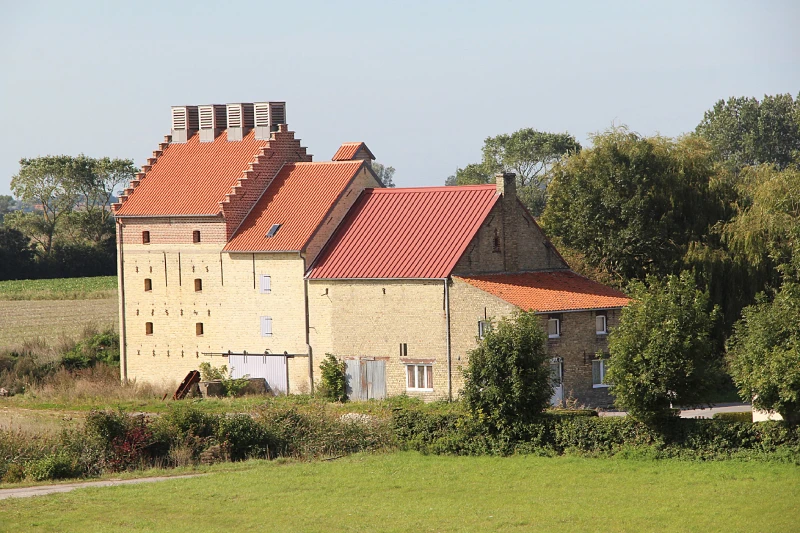
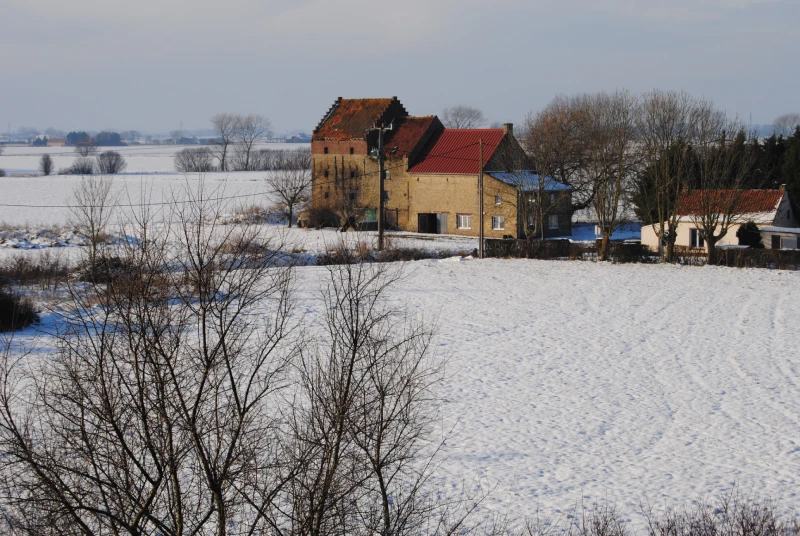
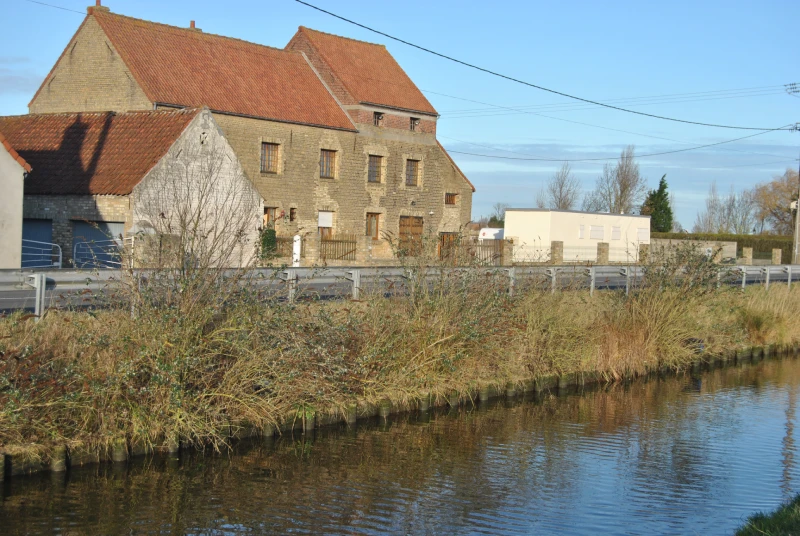
Former chicory drying houses
In the 20th century, chicory cultivation, ideally suited to sandy soils, shaped everyday life in this part of the Audruicq area. After harvesting, chicory roots were pulled up using a “fourkette” and taken to the nearest drying house. There were nearly 60 drying houses across the territory. Today, chicory cultivation and drying have modernised but remain important elements of local heritage and collective memory.

Pont de Guemps Mill
Overlooking the maritime plain, the Guemps mill is still in working order. Restored, it can be recognised by its rotating roof rising above the flat countryside. It bears witness to the intense agricultural activity and product processing that took place in the wateringues area during the 19th century.
Offekerque white mill
This mill was recorded as early as 1809. Thanks to the careful stewardship of three generations of the Lianne family, the mill is still standing today. In the past, its yellow bricks were covered with a white lime render, which gave the mill its name.
the Leaning Tower
During the Second World War, the Germans built a blockhouse shaped like a church to mislead Allied airmen. At the end of the war, they attempted to destroy it, but the explosive charge was too weak and the tower remained in an unusual position, hence its name: the Leaning Tower.