
Church of Zutkerque
Saint-Martin church
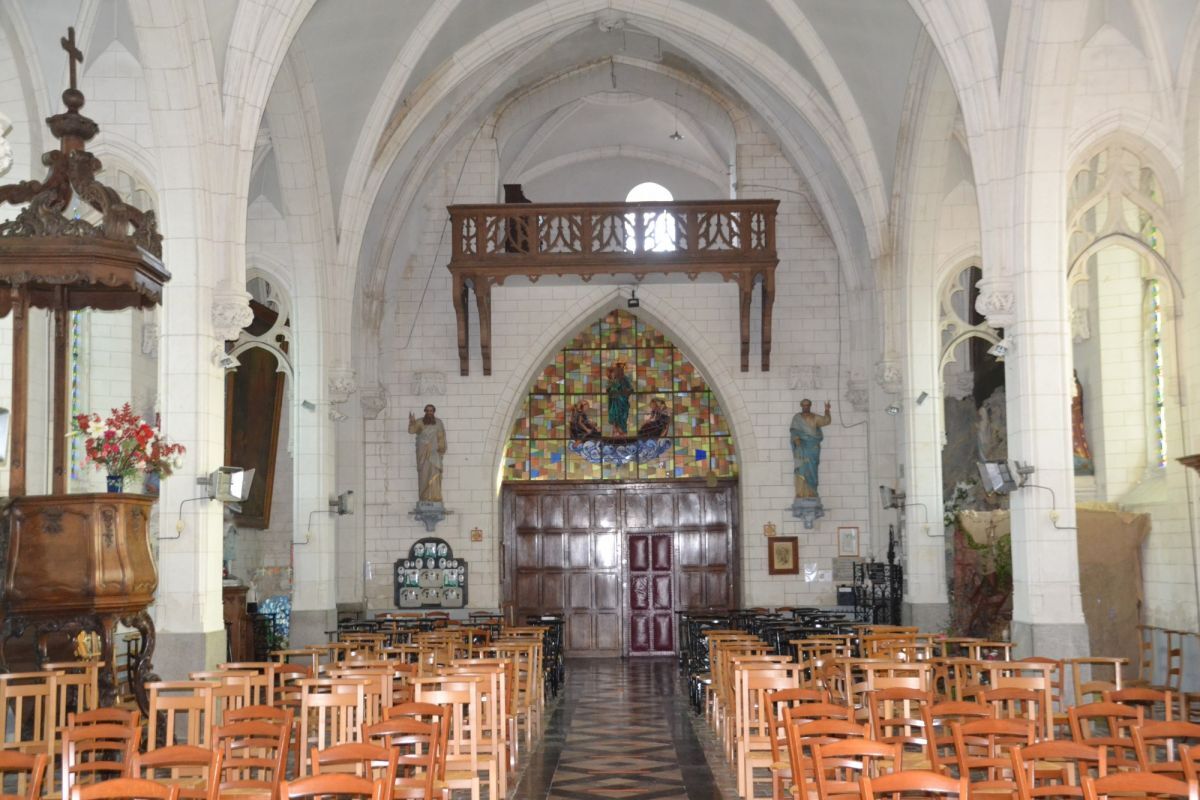
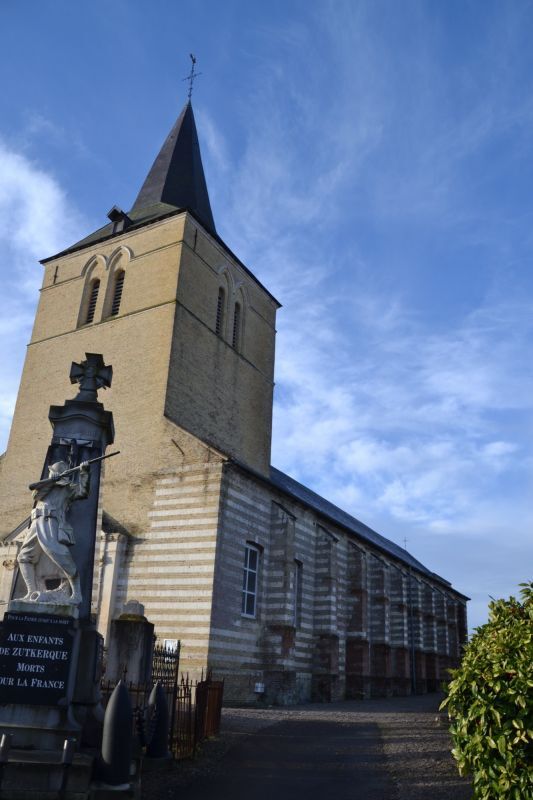
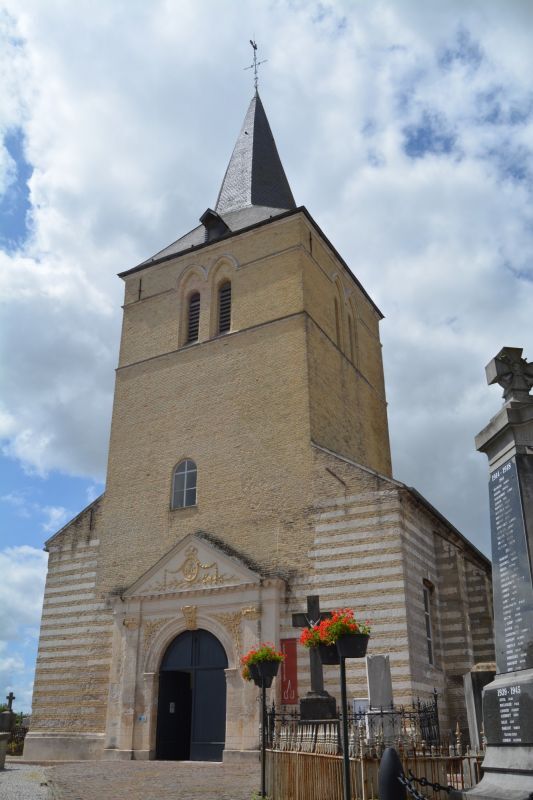
The rest of the church was destroyed during the Revolution of 1789: the furniture and materials were resold. The tower is topped by a wooden spire covered with slate. It houses two bells from 1715 and 1770. The sculpted portico was built in 1807. There are 10 buttresses on the North and South elevations of the building. The church apse is built of brick.
Notable elements
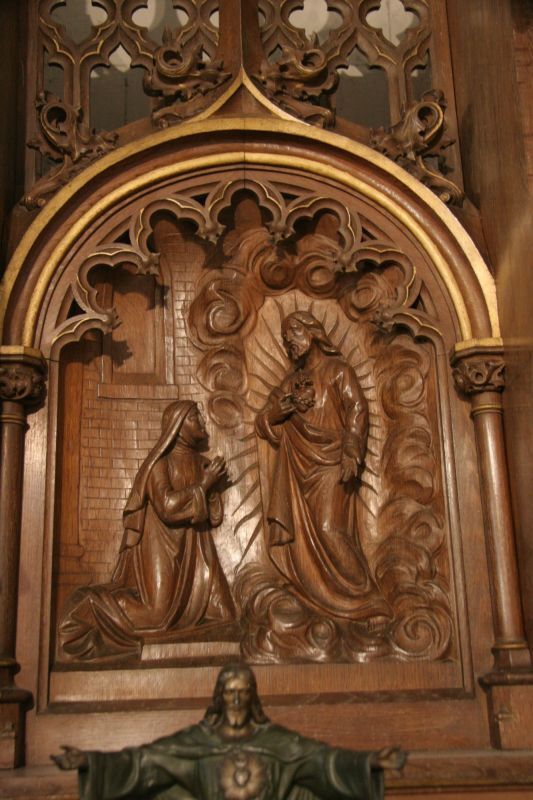
Altars
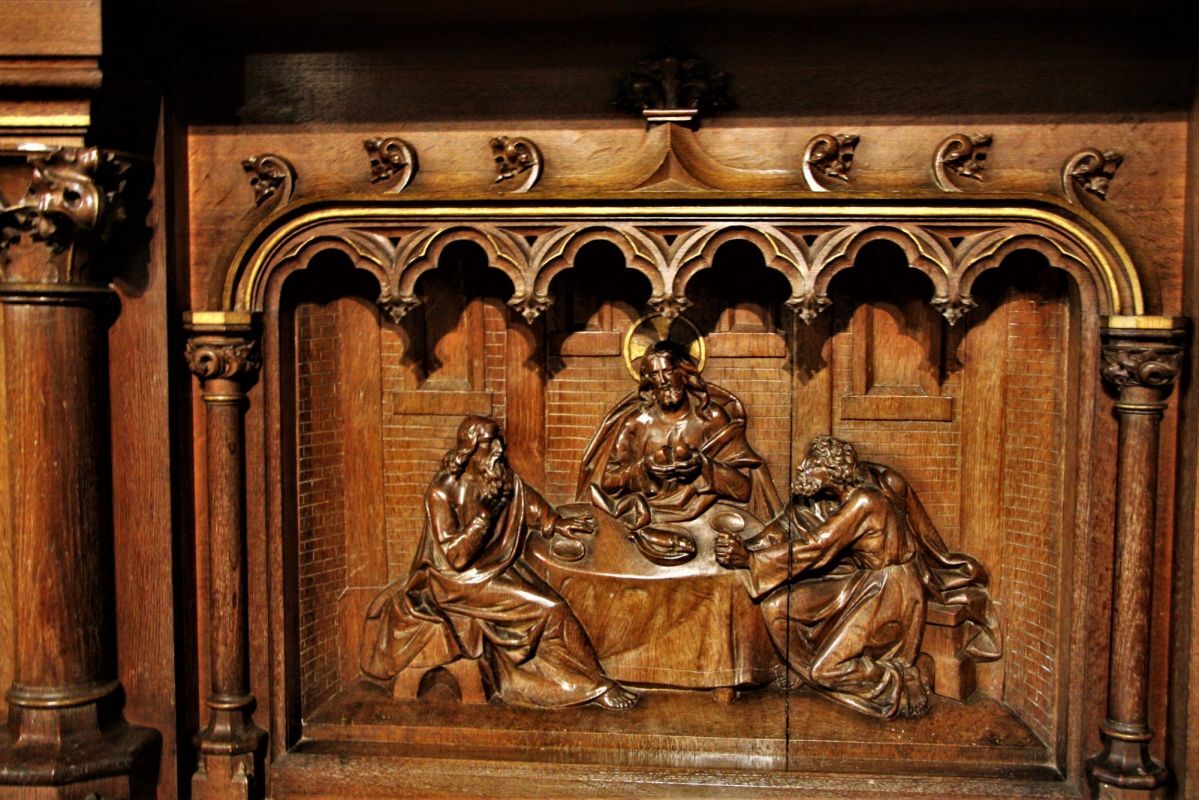
At each end of the side aisles: the altar of the Virgin and the altar of the Sacred Heart. Like the one in the choir, they are made of richly carved wood and recall Gothic architecture.
The pulpit
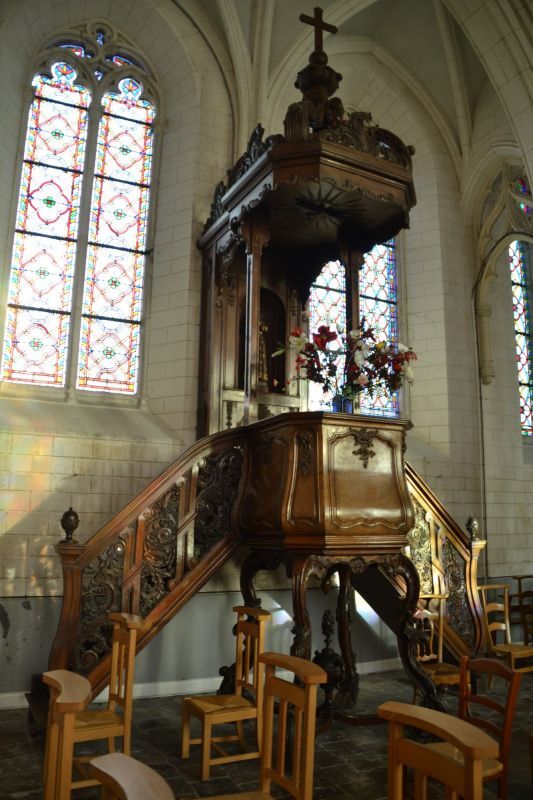
Made of varnished carved wood. It comes from the Church of the Holy Sepulchre in Saint-Omer and dates from the 18th century. It has been classified as an object in the inventory of Historical Monuments since 1978.
The choir
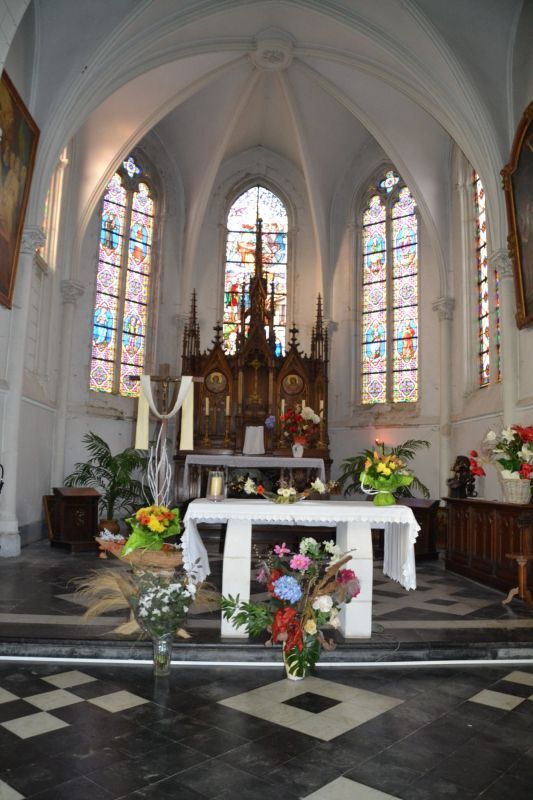
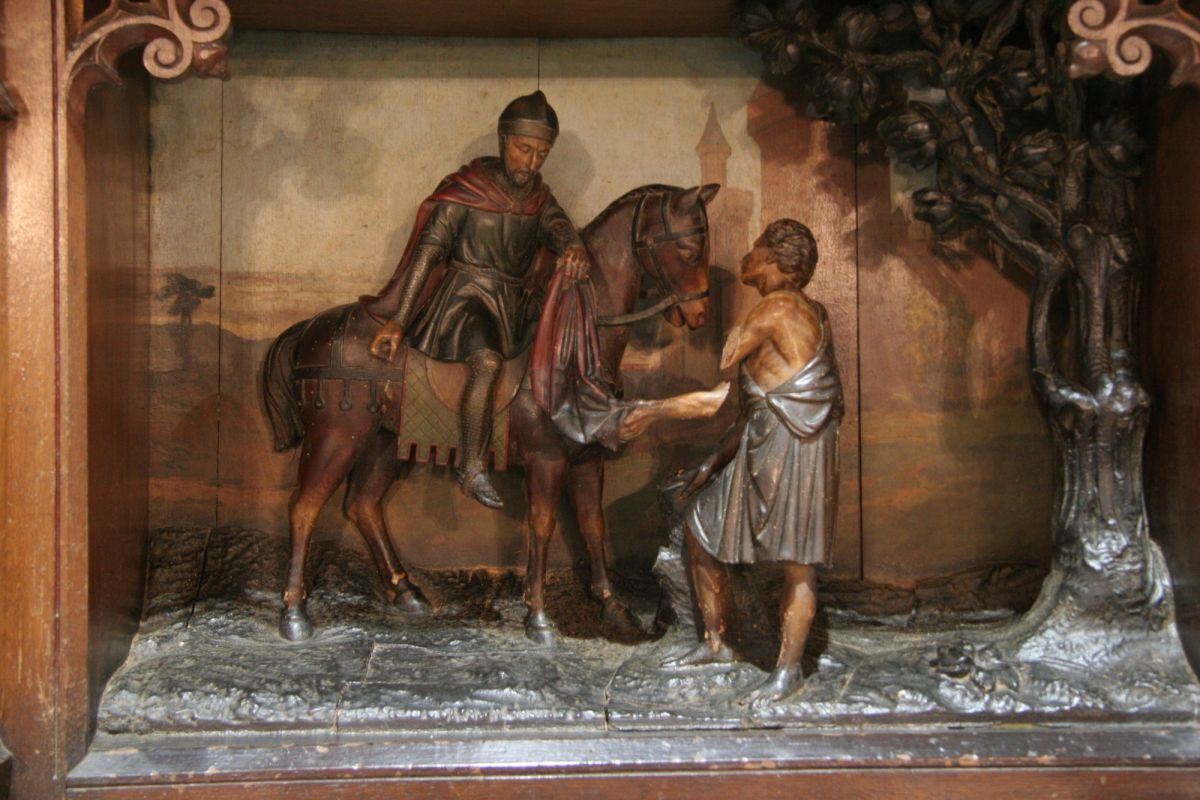
Built in the same architectural style as the nave, it features the high altar, also in Gothic style; a high relief of St. Martin is embedded in it. In front of it is the new limestone altar created in 1970 following the reforms of the Second Vatican Council, which dictated that priests celebrate Mass facing the parishioners and abandon Latin.
The stations of the cross
Made of ceramic. It was manufactured at St. Paul’s Abbey in Wisques and purchased by Father Diéval.
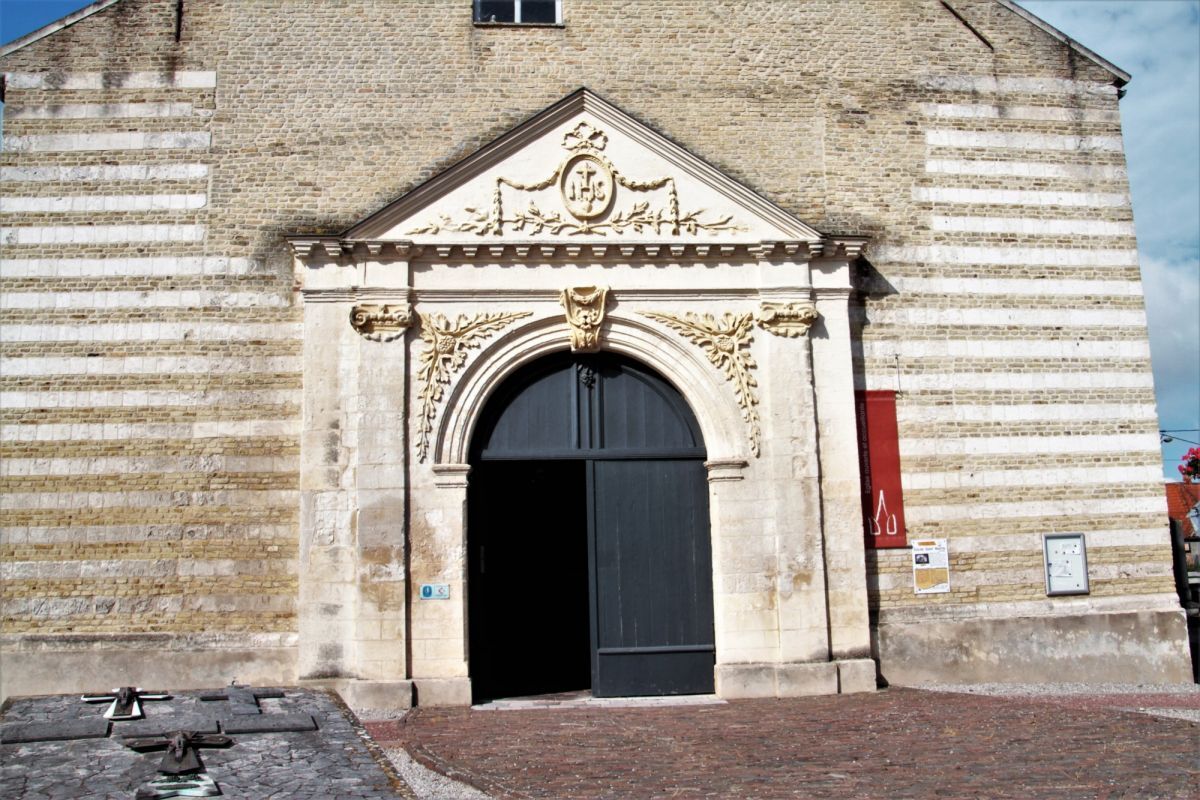
The entrance porta
The semicircular arch entrance is framed by architecture reminiscent of Greek temples. Indeed, on either side of the entrance door, there is an Ionic pilaster, all topped by a denticulated cornice and a triangular pediment. In addition to plant decorations, this pediment features the inscription “IHS,” corresponding to the monogram of Christ. These elements allow us to identify the architecture of the church’s porch tower as Renaissance style.
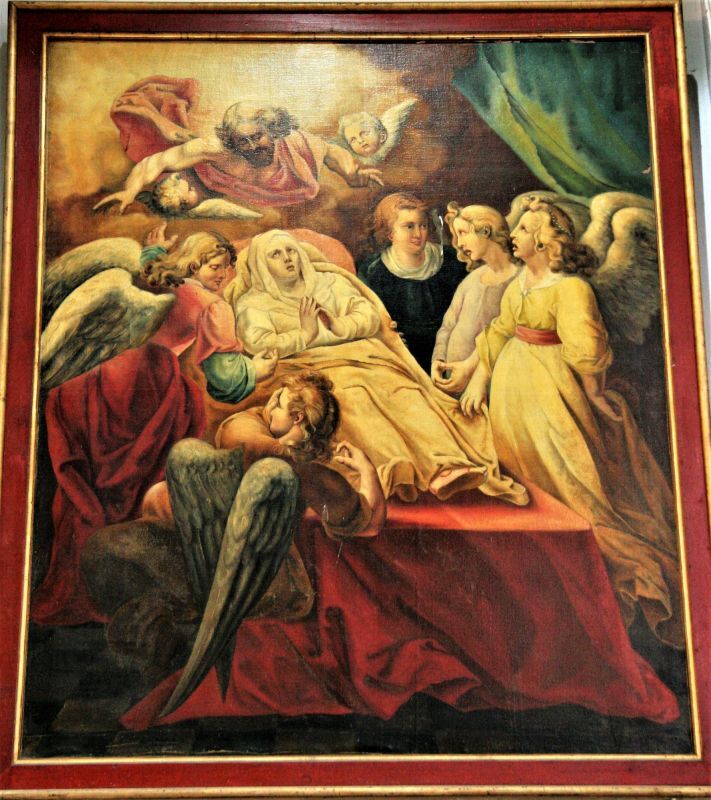
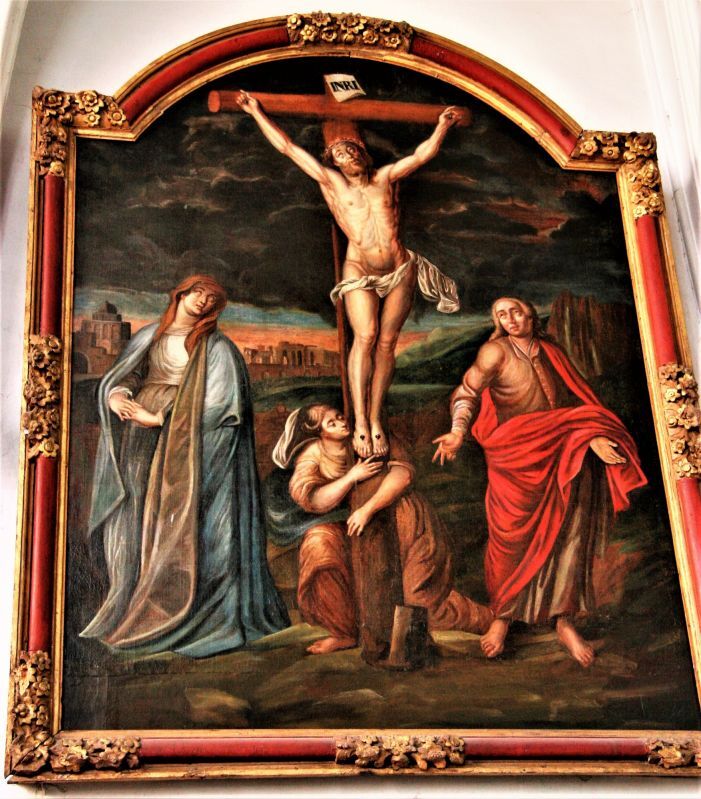
Three paintings
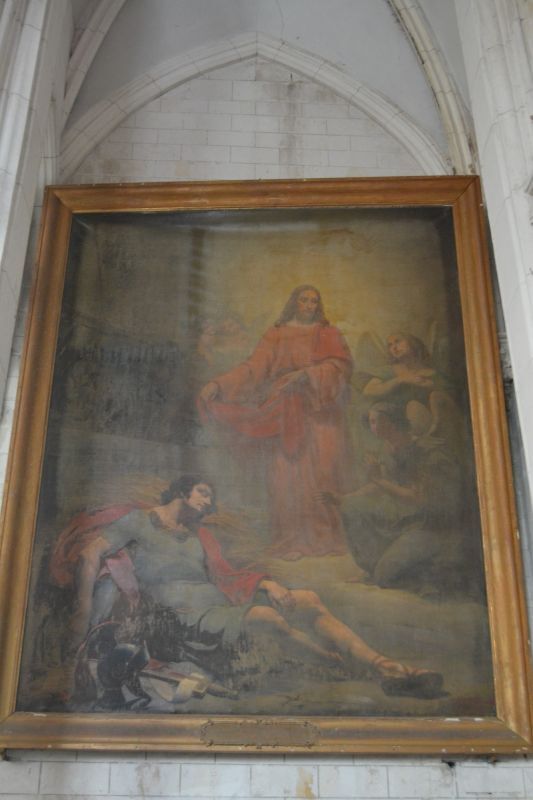
One representing St. Paul’s meeting with the Risen Christ in Damascus, one representing the Assumption of the Virgin, and the last showing Christ on the Cross.
A bit of history
An ancient castle, that of Montoire, is at the origin of the parish. In 1173, the Count of Guînes, Baldwin II, founded a chapel. The lands were drained by the monks of Licques and Saint Bertin. The church was looted in 1595 by the French. The initial church, which was in the shape of a Latin cross, was demolished during the French Revolution. Only the tower, which was in the axis of the transept, was respected. The porch tower, completed in 1555, is the oldest part of the Zutkerque church, which was then part of the diocese of Thérouanne. It seems that at that time, the choir was established in this place, that is to say facing East, as in most churches. The rest of the building was looted and then destroyed during the French Revolution of 1789. The church was rebuilt between 1806 and 1813, and underwent numerous restorations.
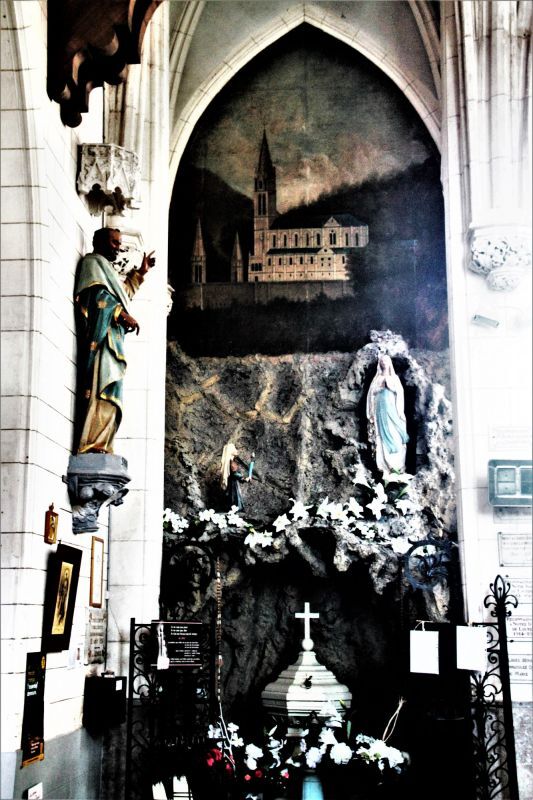
At the entrance to the church, on the left, there is a reproduction of the Grotto of Lourdes.
Practical information
01 january – 31 december
Monday : 10.00 – 16.00
Tuesday : 10.00 – 16.00
Wednesday : 10.00 – 16.00
Thursday : 10.00 – 16.00
Friday : 10.00 – 16.00
Saturday : 10.00 – 16.00