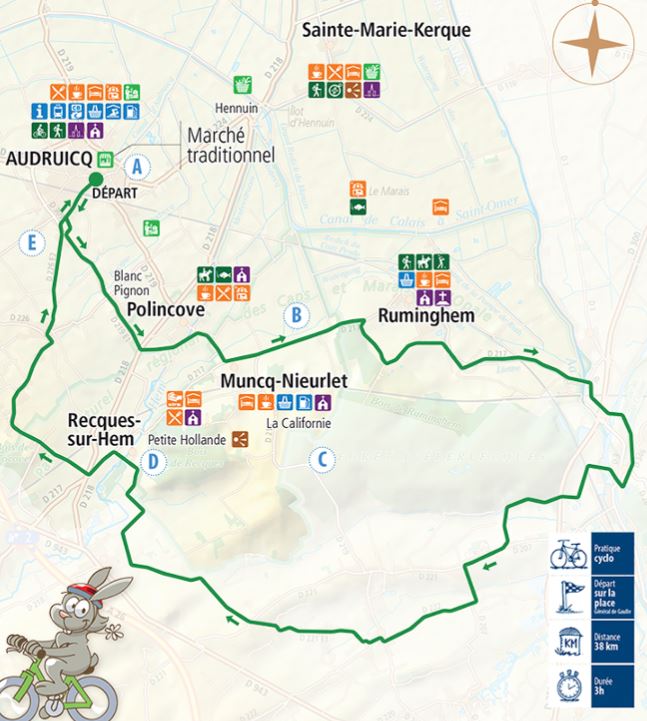
The 3 Cayelles Trail
This route will take you from the Plaine Maritime to the first foothills of Artois.

practical information
Bicycle

start
Place Général de Gaulle

Distance
38 km

duration
3h
A bit of history…
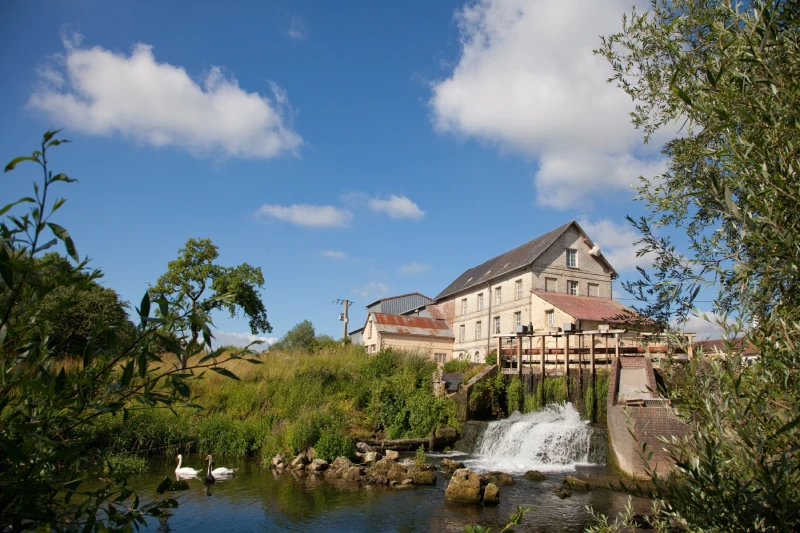
You will leave the Rivière aux Moulins, of which a few remains can still be seen in Polincove, to follow the wooded ridge that marks the boundary of the Calaisis. In the Middle Ages, the monks of Clairmarais owned a large part of these wooded lands. It was in these woods that several chapels dedicated to Saint Anthony and to the Virgin Mary were built.
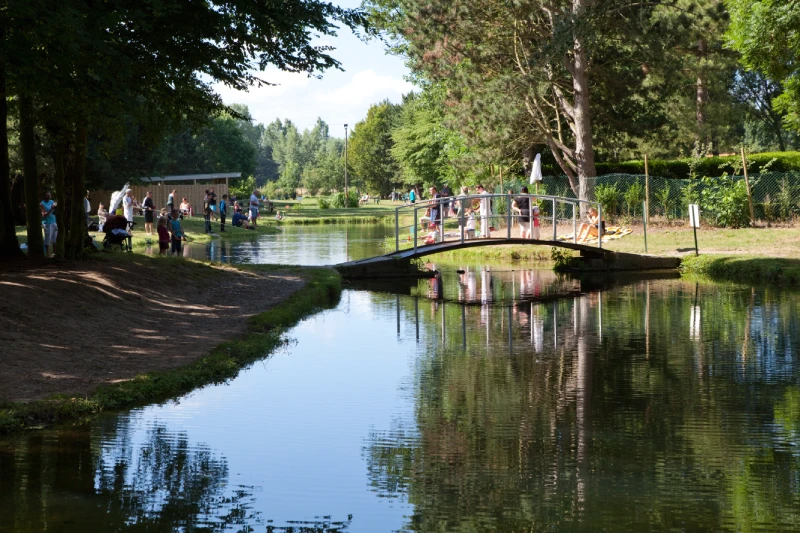
A must-see during your walk!
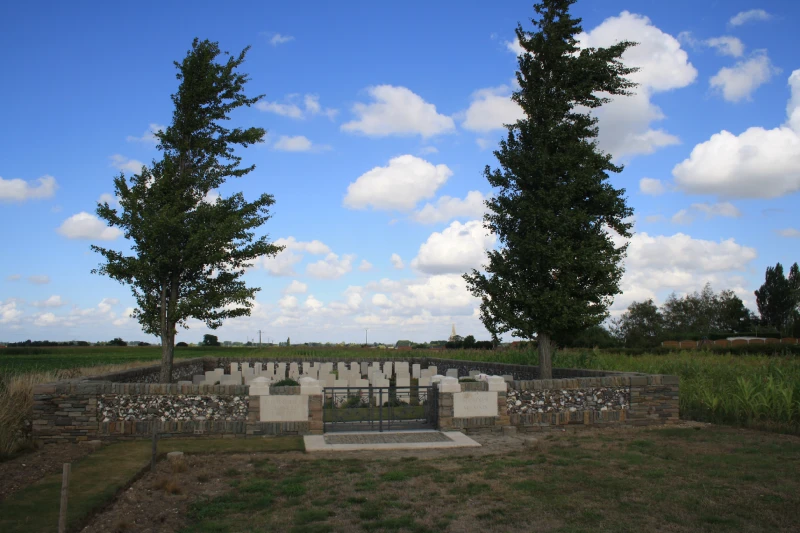
Audruicq castle
Audruicq Castle is a fine 18th-century residence. Built in 1767, the main building was erected in just one month by Jean-Baptiste Cyprien de Laurétan as a surprise for his young wife. At the rear, the castle is flanked by a tall turret, once used to keep watch for approaching enemies.
Chinese Cemetery of Ruminghem
Chinese workers were present in the town from 1917 to 1919. Under the command of senior British officers, they worked as labourers in a munitions camp. The Germans bombed the site in 1916. Many Chinese workers were killed and buried in this cemetery built by the Commonwealth.
Blockhaus of Eperlecques
Impressive Second World War bunker located in the forest of Eperlecques, it was built by Nazi Germany to serve as a launch base for V2 missiles targeting London. Open to the public since 1973 at the Blockhaus d’Eperlecques
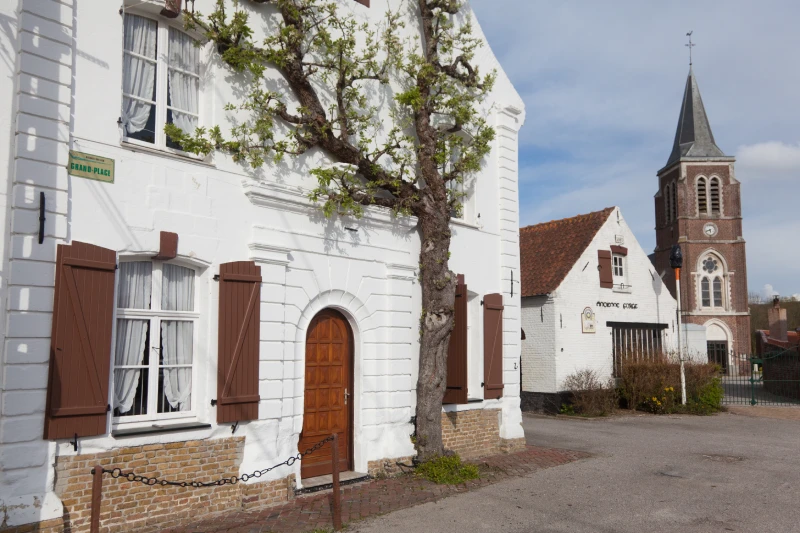
Poirier house
Present for more than 150 years on this house located on the village square of Recques-sur-Hem, these two espalier pear trees have been awarded the label “Arbre remarquable de France”.

Cocove castle
This superb 18th-century building was completed in 1741 by Becquet de Cocove. However, the site itself dates back to the 10th century, when it was occupied by the local lords of the time. Today, it houses a hotel and restaurant.