Marsh trail

Practical information
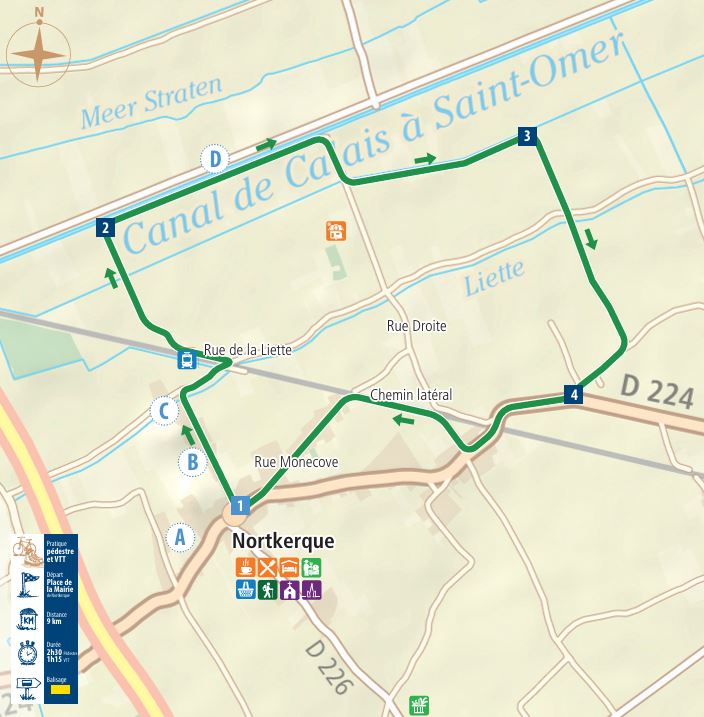
Walking & Mountain bike

Start
Place de la Mairie de Nortkerque

Distance
9km

duration
2h30 (Walking)
1h15 (Mountain bike)
But who is the Marie-Groëtte of the Marshes?
Marie-Groëtte is a legend that tells of a wicked witch said to live in the marshes of Nortkerque. She is believed to lure children who venture too close to the water’s edge, dragging them, with no hope of return, into her cave made of mud and reeds. So children and adults alike, stay alert during your walk, you might just hear the mocking little laughs of Marie-Groëtte.
A must-see during your walk!
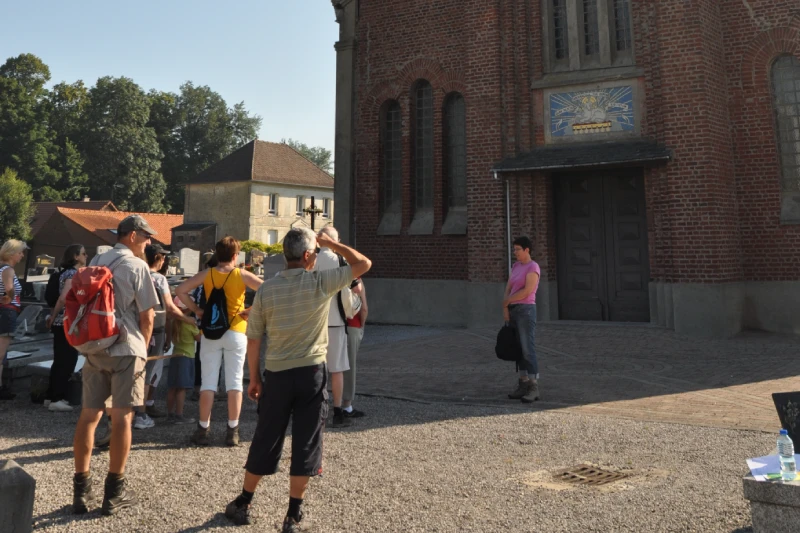
St-Martin church and Arc de Triomphe
Eglise St-Martin was built in 1838. It was only given a bell tower in 1932, designed in the Art Deco style, which is based on the use of simple geometric shapes and volumes. In the cemetery, you can see a triumphal arch dating from 1754, leading to the presbytery built in 1753. You can also notice the war memorial created by Edward Lanteri (1848–1917). A member of the “Églises Ouvertes” network, the church is open from Monday to Saturday, from 10 a.m. to 5 p.m.
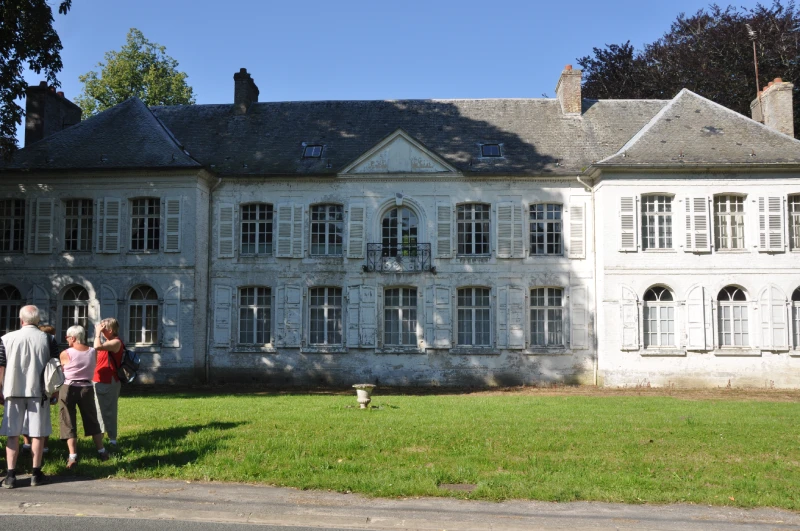
Viscountess’s Castle
The construction of this castle dates back to the 17th century. The Comtesse de Valois lived here for many years. The proportions of the building reflect the Templars’ golden rule, with its 18 paned windows and its Masonic pediment, whose triangle signalled the warm welcome reserved for visitors of the same order.
Palme castle
This 18th-century castle, set in its green surroundings, bears witness to the commune’s aristocratic past.
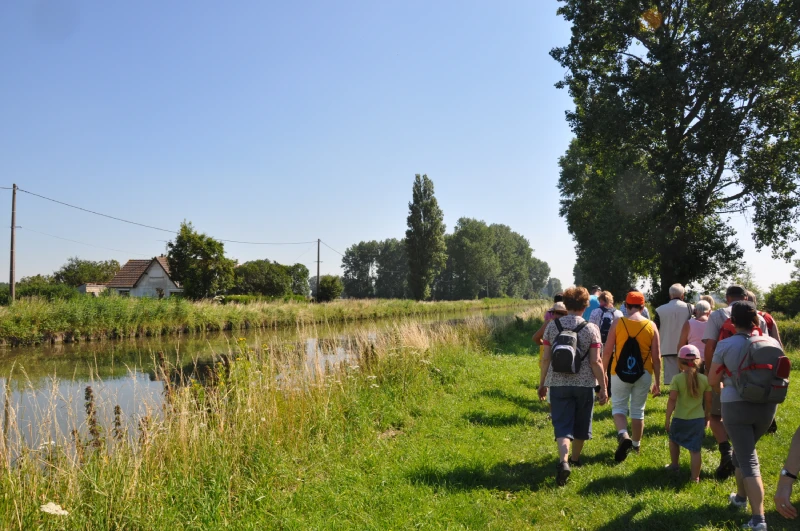
The Calais - Saint-Omer canal
Stretching over 30 km, this canal has linked the Aa to the town of Calais since the 17th century, shortening the route for barges that once used the Canal du Mardyck and the Oye River. Barge traffic is less intense than in the past; however, one or two boats can still be seen passing each day.