Trail of the Dame Blanche des Clochers

Practical information
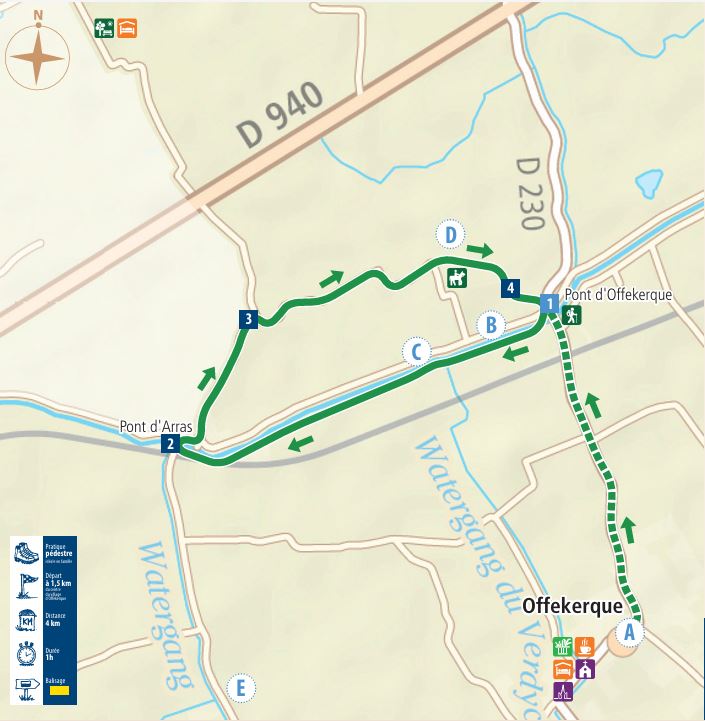
Walking

Start
1.5 km from the centre of the village of Offekerque.

Distance
4km

Duration
1h
What is the secret of the Dame Blanche des Clochers?
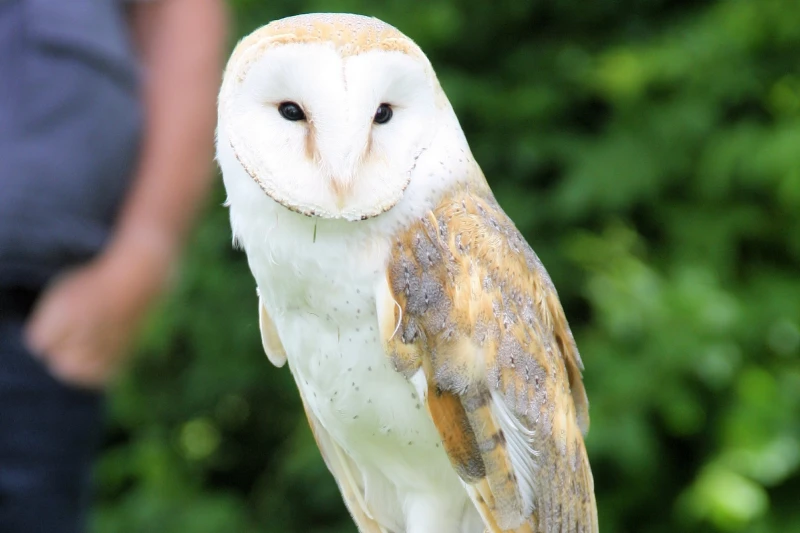
The name ‘Dame Blanche’, also known as the ‘barn owl’, was given to the barn owl, the emblem of the municipality of Offekerque, which also appears on its coat of arms. It originates from a legend according to which a gardener was so miserly and vain that she was transformed into a bird of ill omen by a beggar.
Considered a symbol of misery, covered in feathers and fitted with a hooked beak, she was shunned by both people and animals. She could then only venture out at night in search of food. Over time, however, she has come to be appreciated by farmers for helping rid their fields and barns of mice, voles and other small rodents.
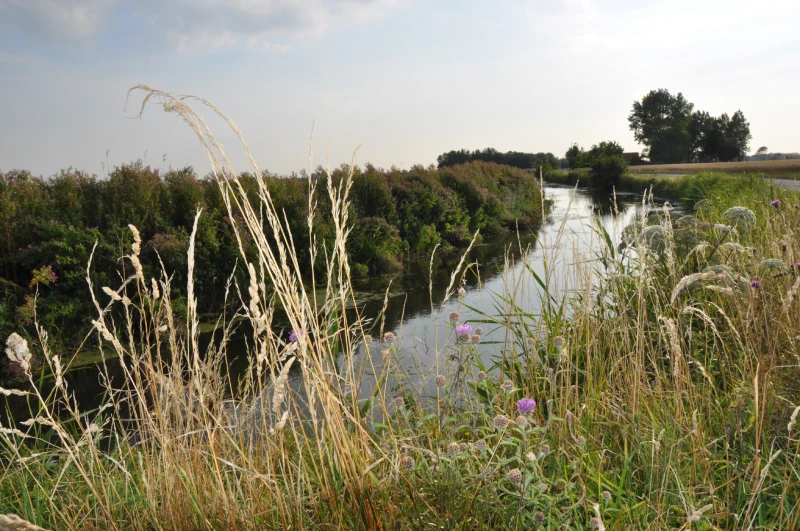
Must-see spots along the way
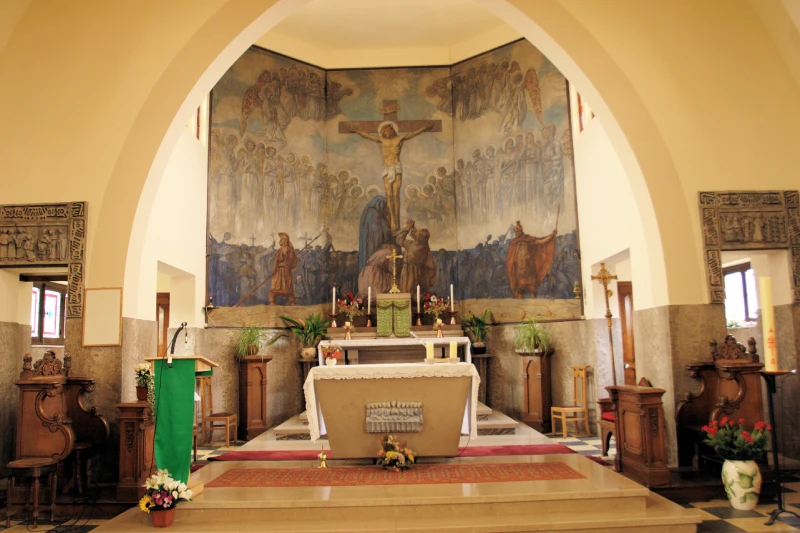
Eglise Ste Marie-Madeleine - Église Ste Thérèse de l’Enfant Jésus
The origins of this church date back to the 18th century. Struck by two fires, it was rebuilt at the beginning of the 20th century using the pale ‘sand-blonde’ brick typical of the Aa Delta region. Designed in a ‘Modernist’ style, the church interior features Marquise marble, but its most remarkable element remains the decoration adorning the chancel and the Stations of the Cross.
This consists of a magnificent fresco by the military painter Lucien Jonas, renowned for illustrating banknotes. A member of the ‘Open Churches’ network, the building welcomes visitors every day from 10 am to 5 pm.
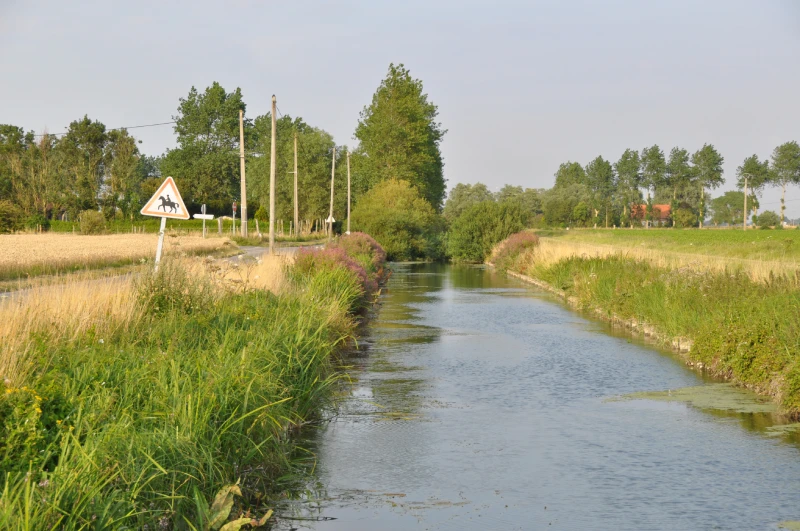
The Oye river
The Oye River is 12 km long. Although called a river, it is in fact a watergang that originates in Marck and flows into the Aa at Gravelines. This waterway drains the watergang region. In the past, it served as a transport route used by flat-bottomed boats.
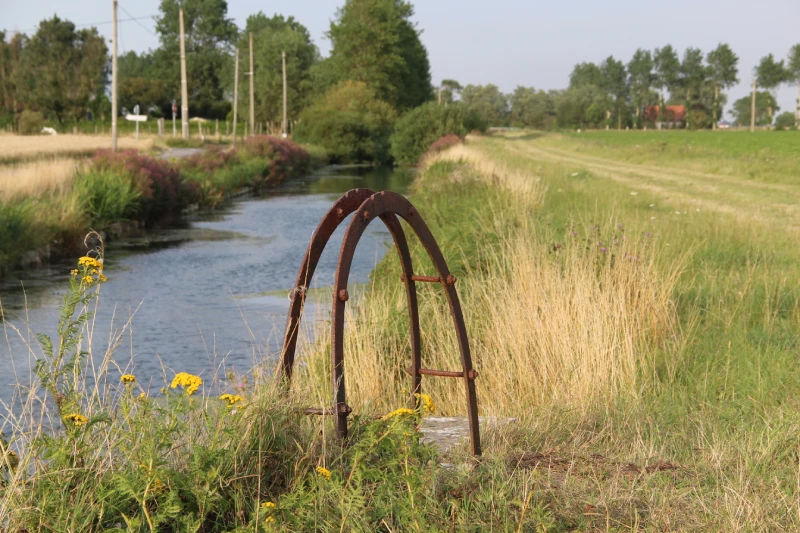
Vantelle
Vantelles are small sluices used to retain or release water. During periods of flooding, the vantelle is opened, allowing water to flow into the river while preventing cultivated fields from being flooded. In dry periods, the vantelle retains water, enabling the irrigation of crops.
Remnants of the Atlantic Wall: the casemates
During the Second World War, the Germans built casemates, or blockhouses, along the coastline in order to defend against a possible Allied landing.
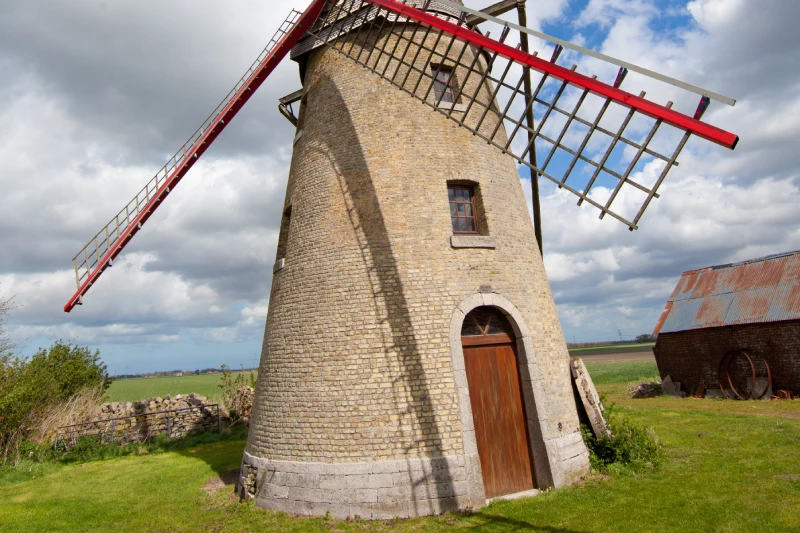
Le Moulin blanc ou Lianne d’Offekerque
A former grain mill used for bread-making, it was built in 1833. The circular brick tower was restored between 1976 and 1978.