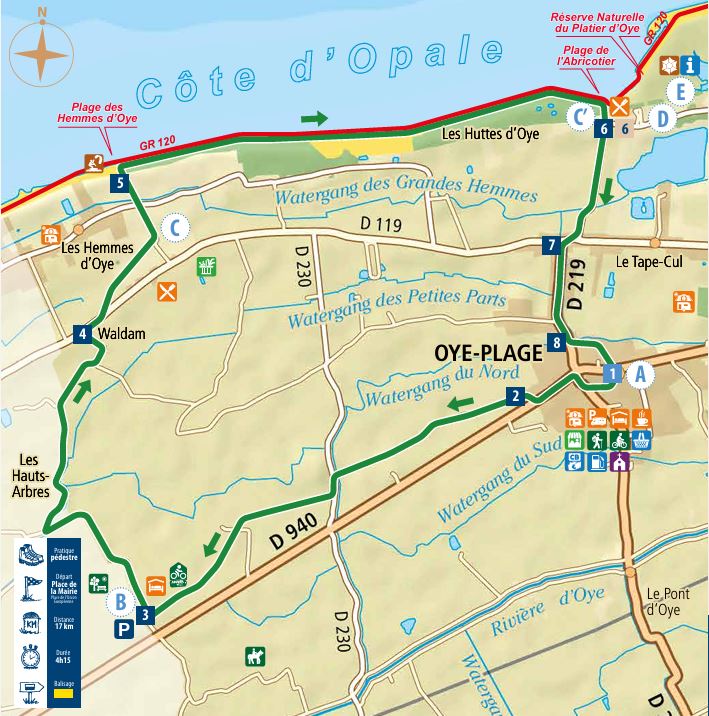
the Anserienne trail

Practical information
Walking

Start
Place de la Mairie
Place de l’Union
Européenne

Distance
17km

Duration
4h15
A bit of history…
‘Oye’, a word of Celtic origin, means ‘island’. In Roman times, only a few sandy islands emerged from a vast expanse of seawater and freshwater. Today, the ingenious network of watergangs (waterways), devised by humans as early as the Middle Ages, ensures the daily drainage of water towards the sea.
The small coastal town of Oye-Plage has chosen to call its inhabitants ‘ansériens’, in tribute to the geese that frequent the Nature Reserve, ‘anser’ meaning ‘goose’ in Latin.
Must-see spots along the way!
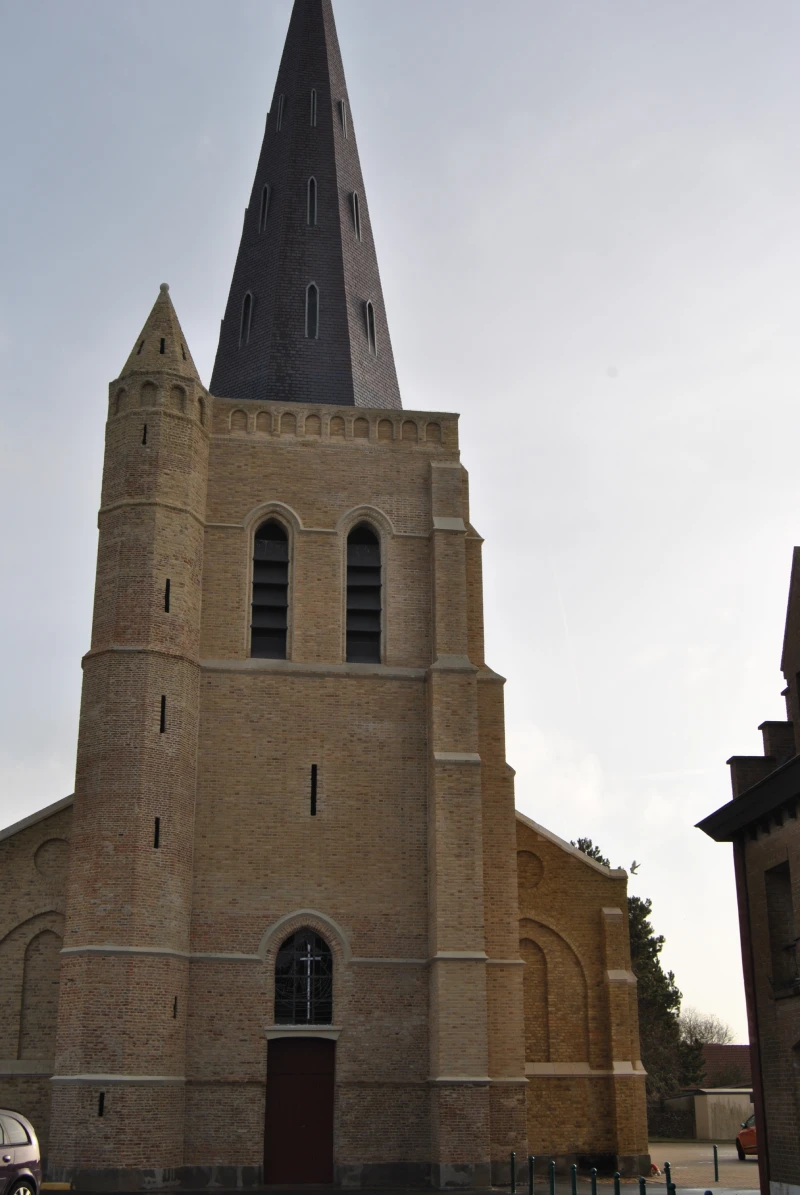
L’église St Médard
During the long period of English occupation in the Calais region (1347–1558), the original church of the small village of Oye-Plage was built in 1533, during the reign of Mary Tudor. It belonged to the Diocese of Canterbury.
In the 19th century, the church became too small and was rebuilt in an ogival (Gothic Revival) style. Its bell tower, located 2 kilometres from the sea, long served as a landmark for sailors. Remarkable stained-glass windows by Henry Lhotellier can also be admired.
Garden of Beau Pays
Listed as a Remarkable Garden, the Beau Pays Garden is a botanical garden featuring a wide variety of plant atmospheres, open from April to October.
50 rue d’Alger – Tel: +33 6 27 51 37 03.
Blockhouses and anti-tank barrier
Along the entire Ansérien coastline, numerous blockhouses (C), remnants of the Atlantic Wall, can be found. Near Abricotier Beach, discover the anti-tank wall (C) (photo opposite), built by the Germans who were convinced that the Allied landing would take place on the Opal Coast.
The Leaning Tower
Along the entire Ansérien coastline, numerous blockhouses (C), remnants of the Atlantic Wall, can be found. Near Abricotier Beach, discover the anti-tank wall (C) (photo opposite), built by the Germans, who were convinced that the Allied landing would take place on the Opal Coast.

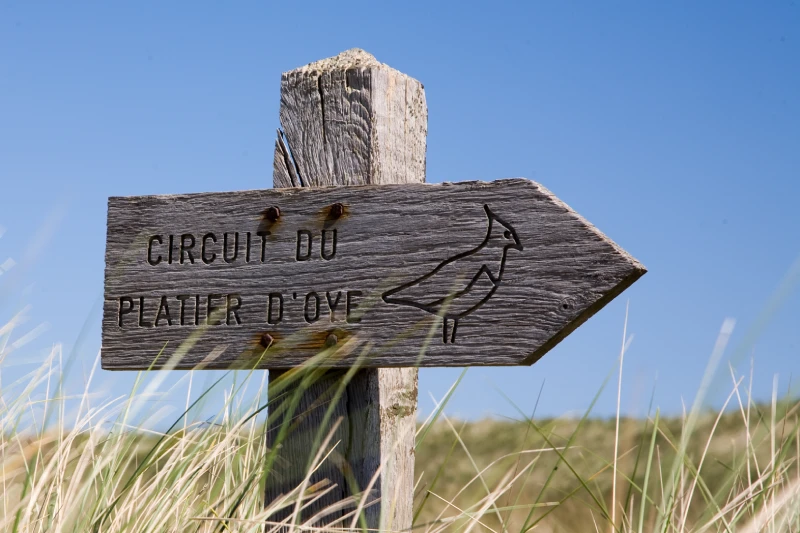
The Platier d’Oye National Nature Reserve
The Platier d’Oye Nature Reserve covers 400 hectares and offers an ideal setting for observing migratory birds, as well as plant species typical of dune environments. Highland cattle from Scotland help maintain the site naturally through grazing.