Church of Offekerque
The Church of Saint Mary Magdalene
Destroyed by a fire on 14 August 1934, the church was rebuilt between 1935 and 1936 by Gustave Vandenbergue and dedicated to Saint Thérèse of the Child Jesus ( the only statue to have escaped the flames.)
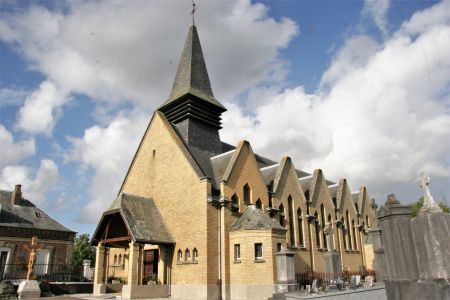
The church is built of pale bricks from the River Aa region and topped with a slate roof. On Sunday 24 March 1968, the day of the mayoral election, a fire broke out beneath the bell tower during the Sunday Mass. The church and part of its furnishings were evacuated. Later that afternoon, the vault collapsed with a deafening crash, fortunately leaving the walls intact.
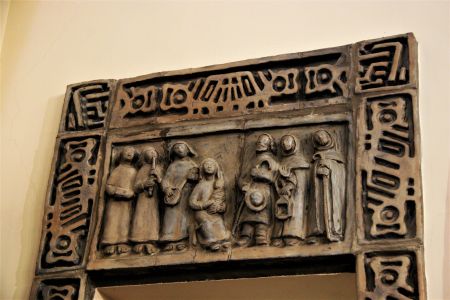
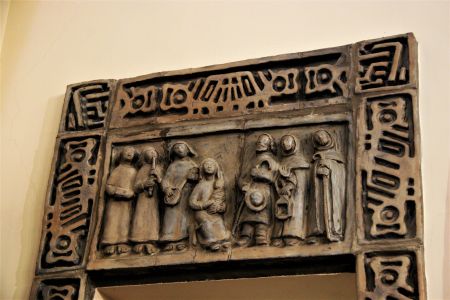
The portal features a double-leaf oak door. Above the entrance, on the tympanum, a sculpted fresco created in 1953 depicts Our Lady of Boulogne and the Child Jesus in a boat. The golden heart symbolises the love God bears for humankind.
Notable features
The Way of the Cross
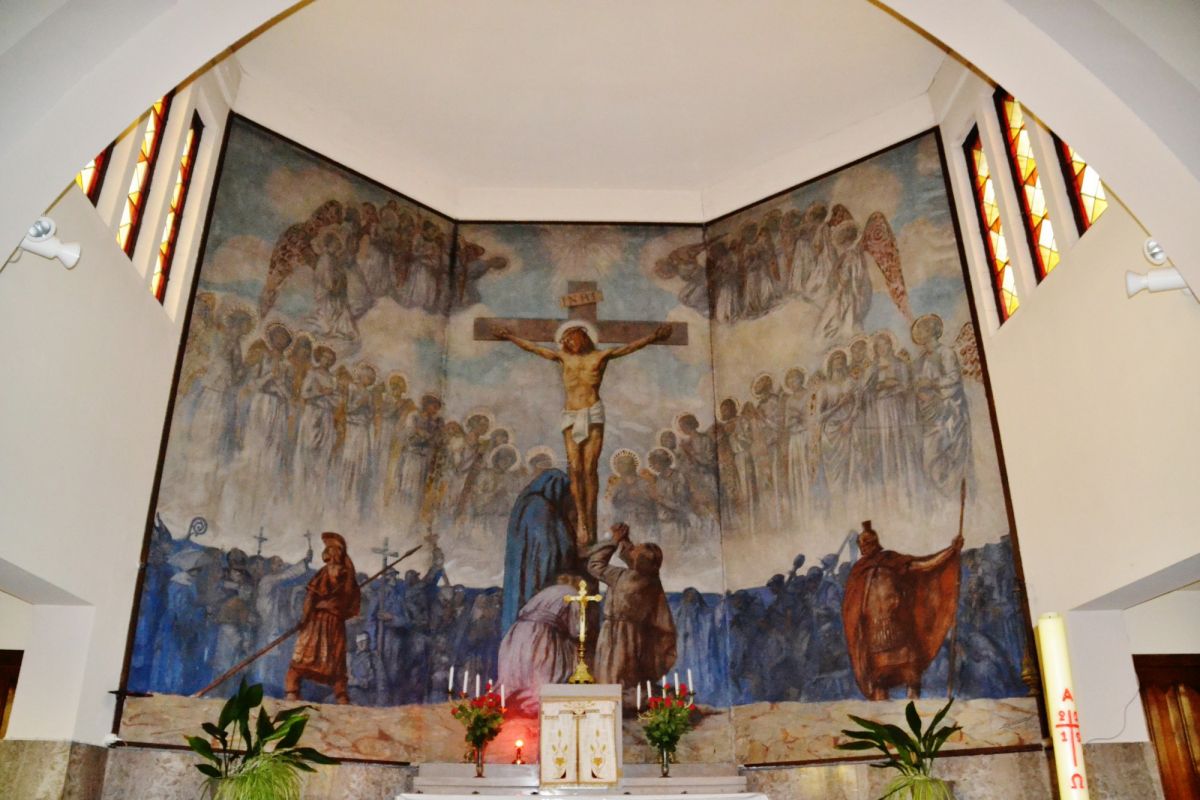
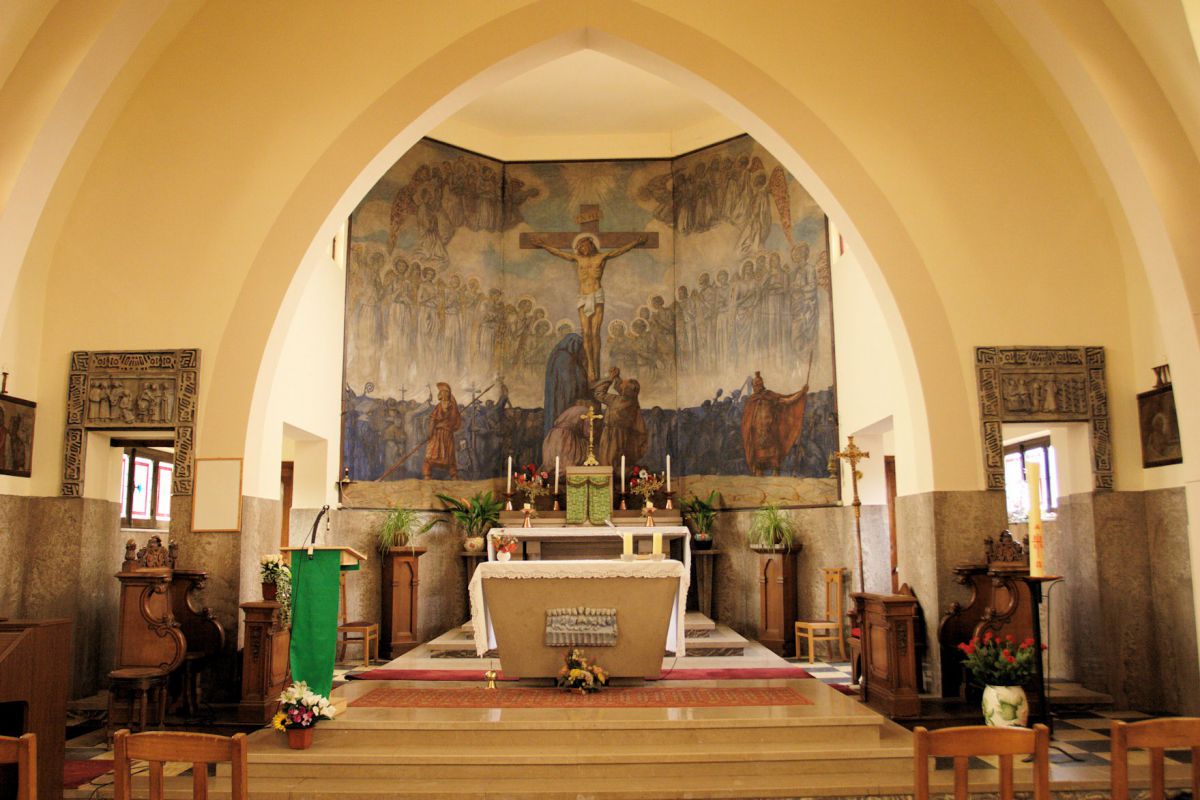
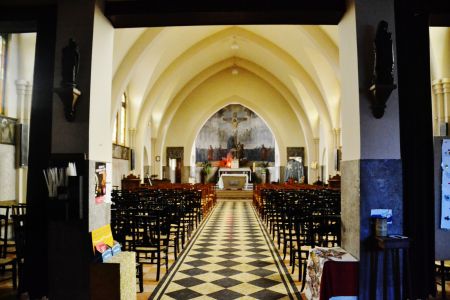
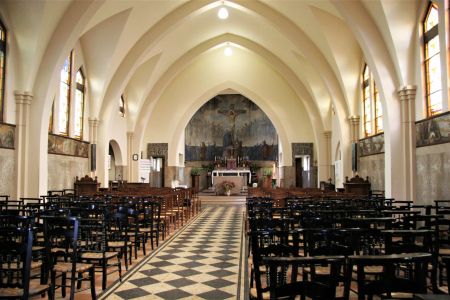
This consists of a set of fourteen paintings on canvas. Lucien Jonas was a renowned artist of his time, a painter and officially accredited war artist. He notably designed a banknote in 1933 and created decorative schemes for the Paris World’s Fair in 1937. The wall of the chancel is covered by a large fresco by Lucien Jonas, dating from 1937. It depicts a monumental Crucifixion, showing at the foot of the Cross the suffering of soldiers at war as well as that of workers.
The baptistery
The baptistery features a magnificent font that was used for baptisms from 1936 to 1968. Each year at Christmas, the baptistery was removed to make room for a Nativity scene. The interior walls of the church are clad in Lunel marble from the quarries of Marquise, with installation beginning in 1949. The stained-glass windows dedicated to Saint Eligius, Saint John the Baptist and Saint Nicholas on the right, and to Saint Catherine, Saint Joan of Arc and Saint Anne on the left, were donated by families from the village. Blown out by a German bombing raid in May 1940, they were replaced in 1947.
Saint Therese
Saint Therese was born in Alençon on 2 January 1873. She was the daughter of Zélie and Louis Martin and lost her mother at the age of four and a half. With special permission from the Pope, she entered the Carmel of Lisieux at the age of fifteen. After nine years of religious life, she died of tuberculosis on 30 September 1897, aged twenty-four. She was beatified by Pope Pius XI on 29 April 1923 in Rome and canonised in Rome on 17 May 1925 by Pius XI. She is the patron saint of missions.
A bit of History
The ‘Hove’ (meaning farm) dates back to the early 12th century, at the time when the area was being drained. This farm stood on the site of the motte located in the present-day cemetery. Nearby, in the middle of the marshland, a church was later built, and the place became known as ‘hovekerque’. In the 16th century, Queen Mary of England, shortly before the recapture of Calais, appointed Antoine Wharton as parish priest of Offekerque. The church was rebuilt in 1617, at which time it was dedicated to Saint Mary Magdalene. The church suffered two fires, in 1934 (upper photo) and in 1968 (lower photo).
Opening hours
01 january – 31 december
mon 9:00 am – 5:00 pm
tue 9:00 am – 5:00 pm
wed 9:00 am – 5:00 pm
thu9:00 am – 5:00 pm
fri 9:00 am – 5:00 pm
sat 9:00 am – 5:00 pm
sun 9:00 am – 5:00 pm
Church services
About once every two months.